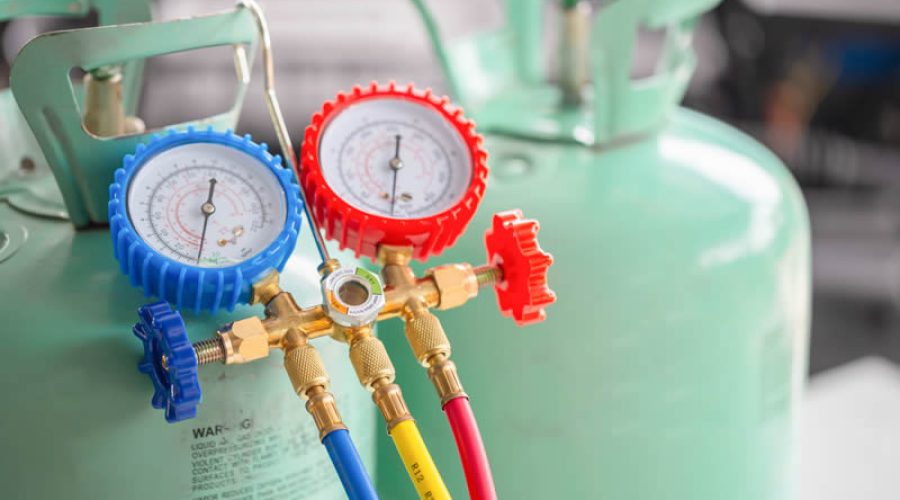
R-32 is increasingly used in HVAC systems for several compelling reasons, balancing environmental, performance, and economic factors:
Lower Global Warming Potential (GWP)
R-32 has a GWP of 675, which is about 68% lower than R-410A (GWP 2088), a common refrigerant it replaces. By taking this approach, we can minimize the environmental impact of potential leaks while also meeting global regulations like the Kigali Amendment to the Montreal Protocol, which aims to phase down high-GWP refrigerants. Plus, R-32 has excellent heat transfer properties, which means it improves the efficiency of the system overall. Studies show it can improve energy efficiency by 5-10% compared to R-410A, reducing electricity consumption and operating costs for users.
Zero Ozone Depletion Potential (ODP)
Like R-410A, R-32 does not harm the ozone layer, making it a safer choice for atmospheric health.
Cost-Effectiveness
R-32 is a single-component refrigerant, simpler and cheaper to produce and recycle than blends like R-410A or R-454B. It also requires less refrigerant charge (up to 20-30% less by volume), lowering material costs for manufacturers and potentially for system maintenance.
Safety and Practicality
Classified as A2L (mildly flammable), R-32 has a low burning velocity and high minimum ignition energy, making it safe for use in properly designed systems. Advances in safety standards (e.g., UL 60335-2-40) and system designs mitigate risks, allowing its use in residential and commercial applications.
Regulatory Compliance
Many regions, including Europe, Japan, and Australia, encourage or mandate low-GWP refrigerants like R-32 to meet climate goals. In the U.S., while alternatives like R-454B (GWP 466) are also used, R-32 is favored for its simplicity and global adoption in smaller systems.
Global Adoption and Compatibility
Over 50 manufacturers, including Daikin, LG, and Panasonic, use R-32, ensuring widespread availability, technician familiarity, and compatibility with existing system designs, especially for ductless and VRF systems.
However, R-32’s mild flammability requires careful handling, and some markets (e.g., parts of North America) prefer R-454B for certain applications due to even lower GWP or regional safety preferences. Despite this, R-32’s combination of environmental benefits, efficiency, and cost makes it a leading choice for modern HVAC systems, particularly in regions prioritizing sustainability.